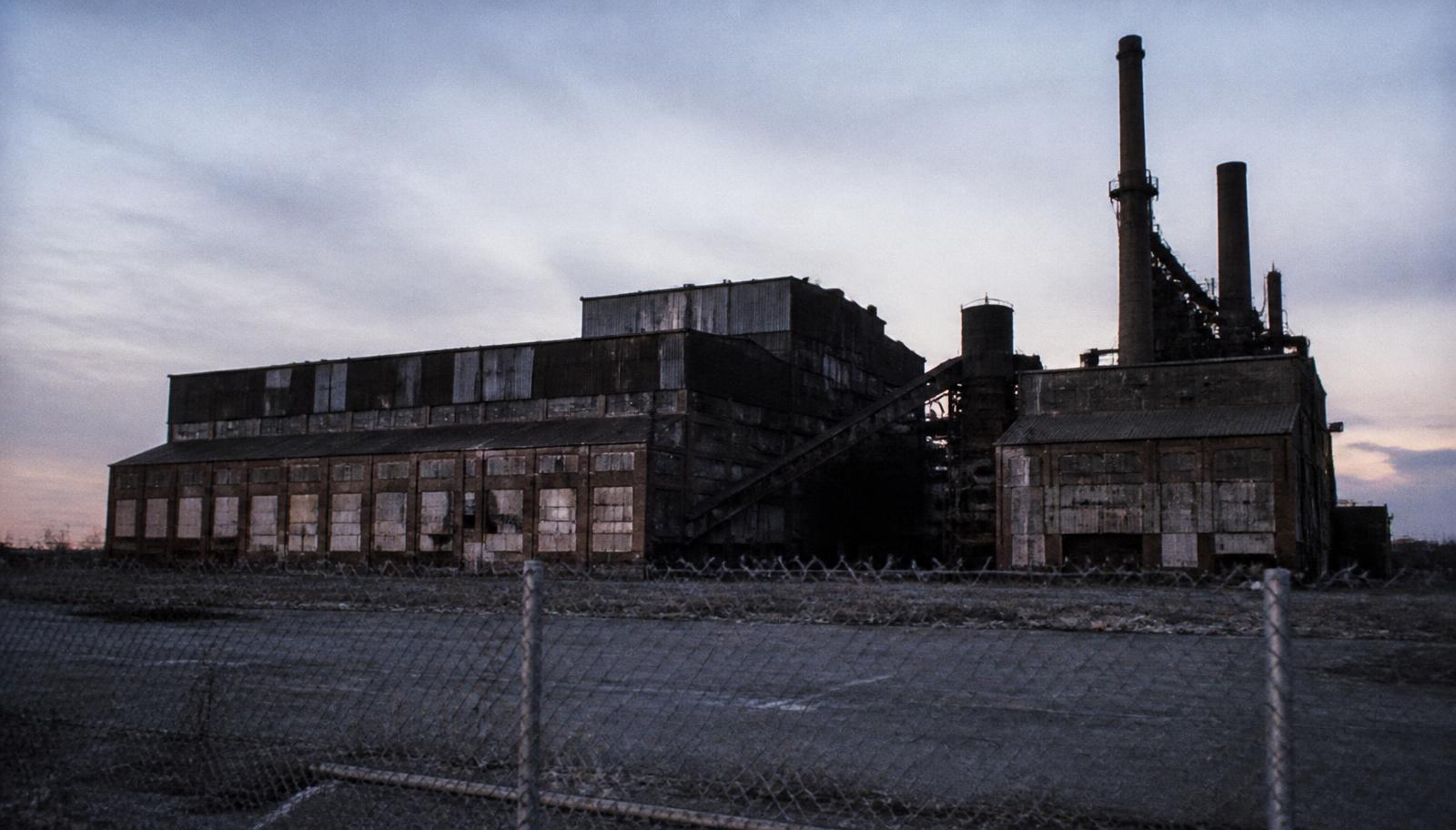
In the 1980s, something extraordinary — and devastating — happened in many American cities.
Factories were closing. Stable working-class jobs were disappearing. Neighborhoods were becoming increasingly isolated from legitimate investment.
And then a new product hit the street.
It was cheap. It produced an intense high. It could be sold in tiny quantities. Customers came back repeatedly. Payment was immediate. And compared with opening a legitimate business, the barriers to entering the underground market could appear almost nonexistent.
That product was crack cocaine.
For some people, crack became an addiction. For others, it became an underground business. For many neighborhoods, it became both at the same time.
The central question
Why crack?
Why did crack cocaine become such a dominant product in certain Black urban neighborhoods — both as something people consumed and something people sold?
The $5 product
Crack created a mass market
Powder cocaine had traditionally been relatively expensive — a status product, purchased in larger quantities by people with disposable income. Crack changed the economics by making cocaine available in far smaller, far cheaper units. The chemistry mattered less than the pricing: a product that once required real money to try could suddenly be bought with pocket change.
Powder cocaine
- Higher entry price
- Often associated with wealthier consumers
- Larger purchase quantities
Crack cocaine
- Small individual units
- Lower entry price
- Rapid consumption
- Repeat purchasing
Small price.
Big market.
Why customers kept coming back
A short high and a long shadow
Smoking cocaine delivers the drug to the brain very quickly. The effect is intense but relatively short-lived, and the comedown arrives fast. That combination — quick onset, brief duration, sharp craving — is what pharmacologists and public-health researchers point to when they explain why crack proved so compulsively repeatable.
- Purchase
- Smoke
- Intense high
- Short duration
- Craving / repeat use
- Another purchase
This cycle was not a business advantage to admire. It was the engine of severe addiction and enormous social harm: lost jobs, lost housing, children separated from parents, emergency rooms and cemeteries filled with people whose lives were compressed by a product designed — economically — to be bought again within the hour.
The street-level business model
Why was it so easy to enter?
To understand the crack era you have to think like an economist for a moment, not a moralist. Every market has barriers to entry. Legitimate small business, in a disinvested neighborhood in 1986, had a wall of them. The underground market had almost none.
Traditional business
- Bank financing
- Credit
- Education
- Licences
- Commercial property
- Insurance
- Startup capital
- Business relationships
Underground market
- Small amount of capital
- Product access
- Customers
- Cash
- Informal network
This comparison exists to explain economic accessibility — nothing else. There is no instruction here, and there never will be on SwaggaLIVE. The point is structural: when one door needs a banker’s signature and the other needs almost nothing, the second door gets used.
Cash today
Cash. Immediately.
Legitimate economy
- Work
- Wait
- Paycheck (two weeks later)
Street economy
- Transaction
- Immediate cash
For a teenager whose family is behind on rent this week, the difference between money on Friday the 15th and money in ninety seconds is not a small one. Immediacy was one of the underground market’s most powerful — and most destructive — features.
When the factories left
Deindustrialization
Between the 1970s and the 1980s, manufacturing employment collapsed in cities like Detroit, Chicago, Cleveland, Baltimore and Newark. Jobs that had supported a Black working class — union wages, pensions, a mortgage — moved to the suburbs, to the non-union South, or overseas. Sociologists such as William Julius Wilson documented what was left behind: concentrated poverty in neighborhoods that had lost their economic anchor.
- Factory closures
- Job losses
- Concentrated poverty
- Reduced economic mobility
- Informal economies
- Drug markets
Deindustrialization did not cause the crack epidemic on its own. Supply chains, pricing, policy, policing and addiction science all played their part. But it is one of the major structural factors, and any account that leaves it out is telling you a story about individuals when the real story is also about economies.
The underground job market
Crack didn’t just create dealers.
Large illicit markets behave like industries. Researchers who studied them found layered informal economies: people selling, people supplying, people providing services around the trade, and a wide periphery of neighbors whose small incomes became entangled with it. Money circulated — badly, dangerously, but it circulated in places where almost nothing else did.
We deliberately stop the description there. Understanding that an ecosystem existed is history. Detailing how it functioned would be something else entirely, and it is not what this feature is for.
Why young people saw opportunity
Imagine being 18 years old.
The legitimate economy offers you minimum wage — if it offers you employment at all.
Yet somebody on your block appears to be making several times that amount in cash.
But apparent street wealth concealed enormous costs:
Economists who studied street-level drug earnings found something the mythology never mentions: for most participants the money was low, irregular and paid for with risk nobody in a legitimate job is asked to accept. The visible exception on the corner was never the average.
Fast money ≠ long-term wealth
Women and the crack economy
Not one story, and not only men
The crack era is usually narrated through young men on corners. That is incomplete. Women were present across the whole picture: selling, running informal businesses at the edges of the trade, holding households together, raising the children of relatives who were incarcerated or addicted, and — in enormous numbers — surviving addiction themselves under a level of public contempt that men were rarely subjected to.
The caricatures of that period did real damage and were used to justify policy. There was no single Black male experience of the crack era, and no single Black female experience either. There were millions of individual ones.
Was crack a “Black drug”?
No.
Cocaine use existed — and still exists — across every racial and socioeconomic group in the United States. Federal survey data from the era showed cocaine consumption spread widely across white, Black and Latino populations, and across income levels.
What differed was visibility and geography. Highly visible open-air crack markets became concentrated in some segregated, economically distressed Black neighborhoods, for reasons that are structural rather than cultural:
A transaction inside a suburban house is invisible. The same transaction on a corner is a statistic, a headline and an arrest.
Crack vs. powder
The sentencing gap
U.S. drug policy treated the two forms of the same drug very differently. Under the Anti-Drug Abuse Act of 1986, the quantity of crack that triggered a mandatory minimum sentence was a small fraction of the powder quantity required for the same penalty — a disparity later reduced by the Fair Sentencing Act of 2010 and further addressed by the First Step Act of 2018.
Same drug family.
Very different consequences.
Because crack markets were visible, street-based and heavily policed, that legal asymmetry landed on specific neighborhoods and specific families. The result was one of the sharpest racial disparities in the history of American incarceration — a generation of prison sentences, disrupted households and permanent records attached to the cheaper version of the same molecule.
The paradox
The same product that brought cash into the neighborhood also helped destroy the neighborhood.
Immediate underground income existed side by side with everything it cost: addiction, violence, incarceration, family instability, lost household income, businesses that never opened, property that lost its value, blocks that never recovered. There is no version of this ledger that balances.
Entrepreneurship without opportunity
The skills were transferable. The market was not.
Read the accounts of that era closely and you keep meeting the same capacities — the ones business schools charge money to teach:
The talent was real.
The market was wrong.
What happens when entrepreneurial ability exists in a community but legitimate capital and opportunity do not?
That is the question underneath this entire feature — and the reason SwaggaLIVE exists. Capability was never the scarce resource in these neighborhoods. Access was.
Hip-hop and the crack era
The archive nobody funded
No institution documented the crack era from the inside. Hip-hop did. Across three decades, records became the primary record: street entrepreneurship, fast money, addiction, police, prison, family trauma, neighborhood decline, survival, hustler mythology, redemption and — eventually — ownership.
Some of it warned. Some of it mythologized. Most of it did both in the same verse. That contradiction is not a flaw in the music; it is an accurate reflection of a period in which the same block produced income and funerals. Hip-hop became one of the main cultural mediums through which communities remembered and processed what happened to them.
From crack money to creator money
The hustle didn’t disappear.
The opportunities changed.
Then
- Street corner
- Cash economy
- Illegal market
- Physical territory
Now
- Smartphone
- Creator economy
- Digital distribution
- Global audience
The same instincts — read the customer, move fast, build a network, take a calculated risk — now have legitimate markets to work in:
Turn the hustle into ownership.
Foluwa “Ultr@” Rewane — closing editorial
The crack era should not be remembered simply as a story about drugs.
It was a story about economics. About race. About neighborhoods. About employment. About government policy. About addiction. About entrepreneurship. And about what happens when the underground economy becomes more accessible than the legitimate economy.
Maybe the most important question isn’t:
“Why did so many Black men and women sell crack?”
Maybe the real question is:
Why did selling crack sometimes look like a better economic opportunity than everything society was offering them?
That is the conversation we need to have.
— Foluwa “Ultr@” Rewane
Founder & CEO, SwaggaLIVE.com
When legitimate opportunity disappears, the underground market can begin to look like opportunity.
A SwaggaLIVE Original by Foluwa “Ultr@” Rewane
This feature is published for historical, cultural, economic and sociological understanding. It does not glamorize addiction, trafficking or violence, and contains no operational information about drug production or distribution. If you or someone you love is struggling with substance use, contact a local health service or, in the U.S., SAMHSA’s National Helpline at 1-800-662-4357.
